Nammet Recipe Website
A self-hosted recipe website for one household or a small group. Recipes are plain JSON files in a folder, the front end is a single HTML page with vanilla JavaScript and CSS, and nginx serves the lot. There is no database, no build step and no front-end dependencies.
An optional Node service adds sign-in, recipe import (from a file, a web page or pasted text), adding recipes in a form, and an admin page. Without it, the site still browses and cooks.
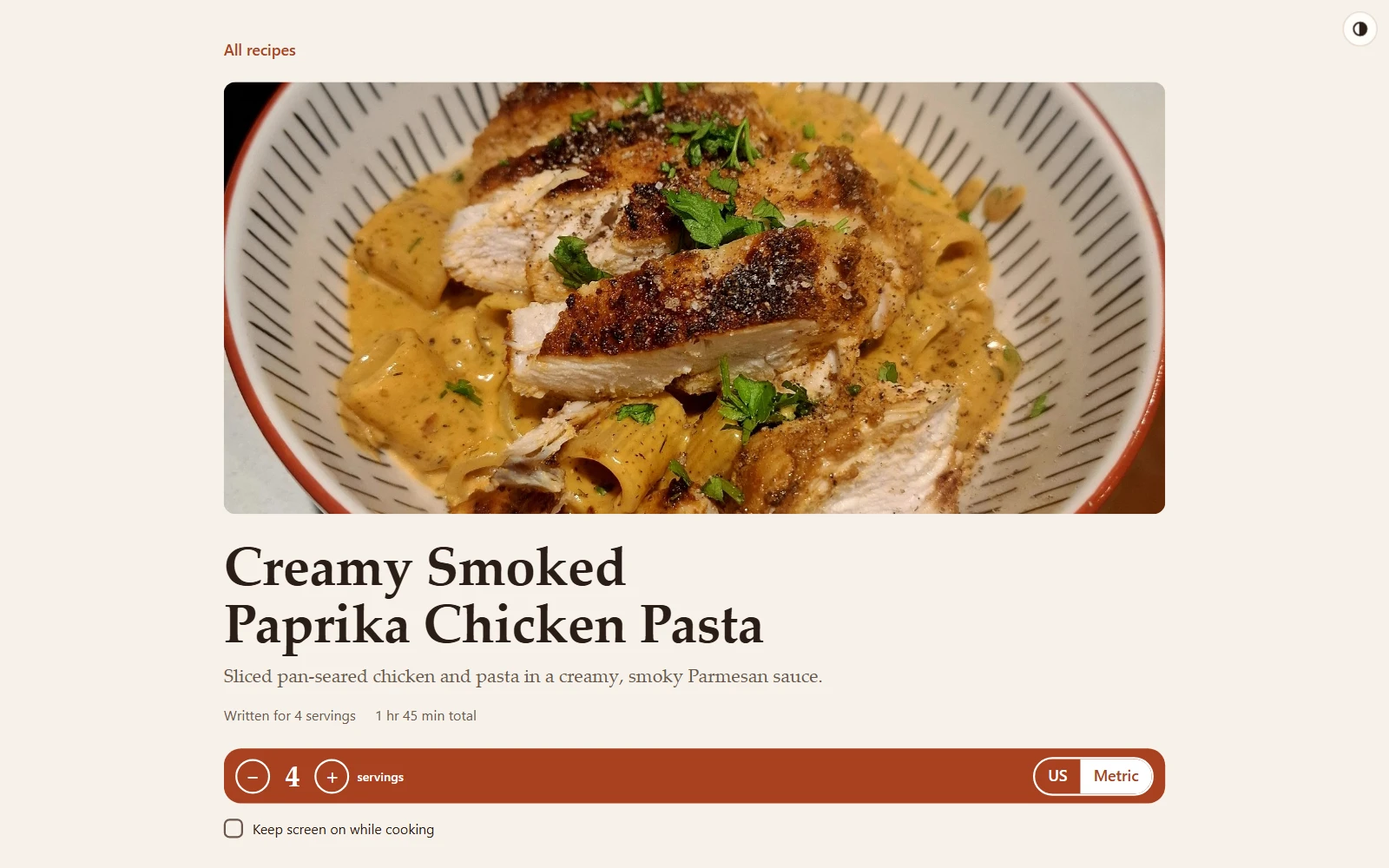
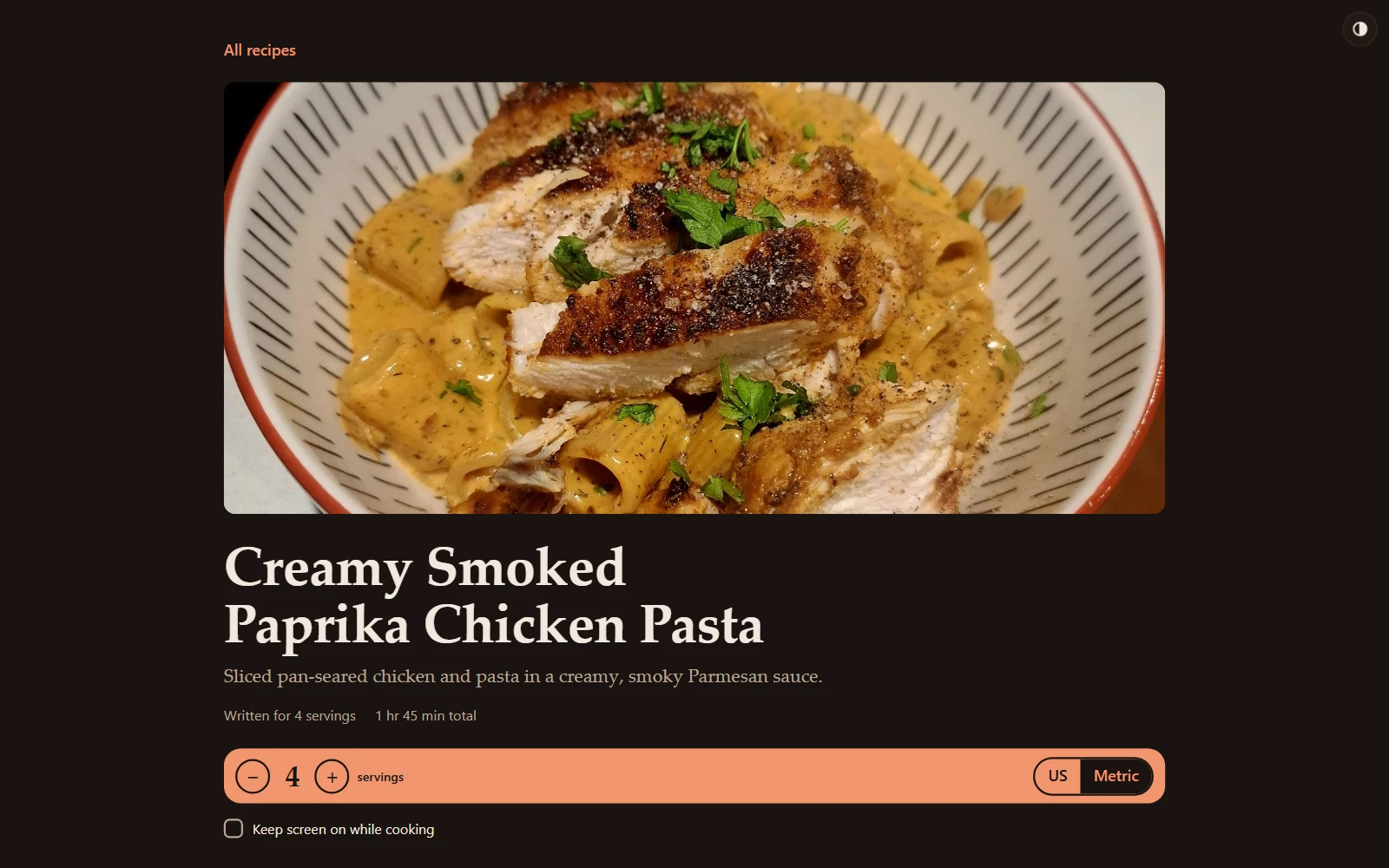
Where to start
- Install: set up a server from a fresh Rocky Linux 10 VM, with
install.shor by hand, and run the import service. - Docker: run the published image, with volumes, settings and updating.
- Using the service: signing in, roles, passwords and importing recipes.
- Recipe format: the JSON spec for a recipe file.
Features
For cooking
- Search across titles, descriptions, tags and ingredients.
- Scale any recipe to a different number of servings.
- Switch between US and metric units.
- Tick off ingredients and steps as you go.
- Step timers with an alarm that keeps beeping until you dismiss it.
- A "Keep screen on" option so your phone doesn't lock with flour on your hands.
- Light and dark mode.
With the import service
- Import from a recipe web page, PDF, cookbook photo or plain text.
- Write or edit recipes in a form, with a live preview and photos.
- An admin page for users, the site's look and the Claude model and API key.
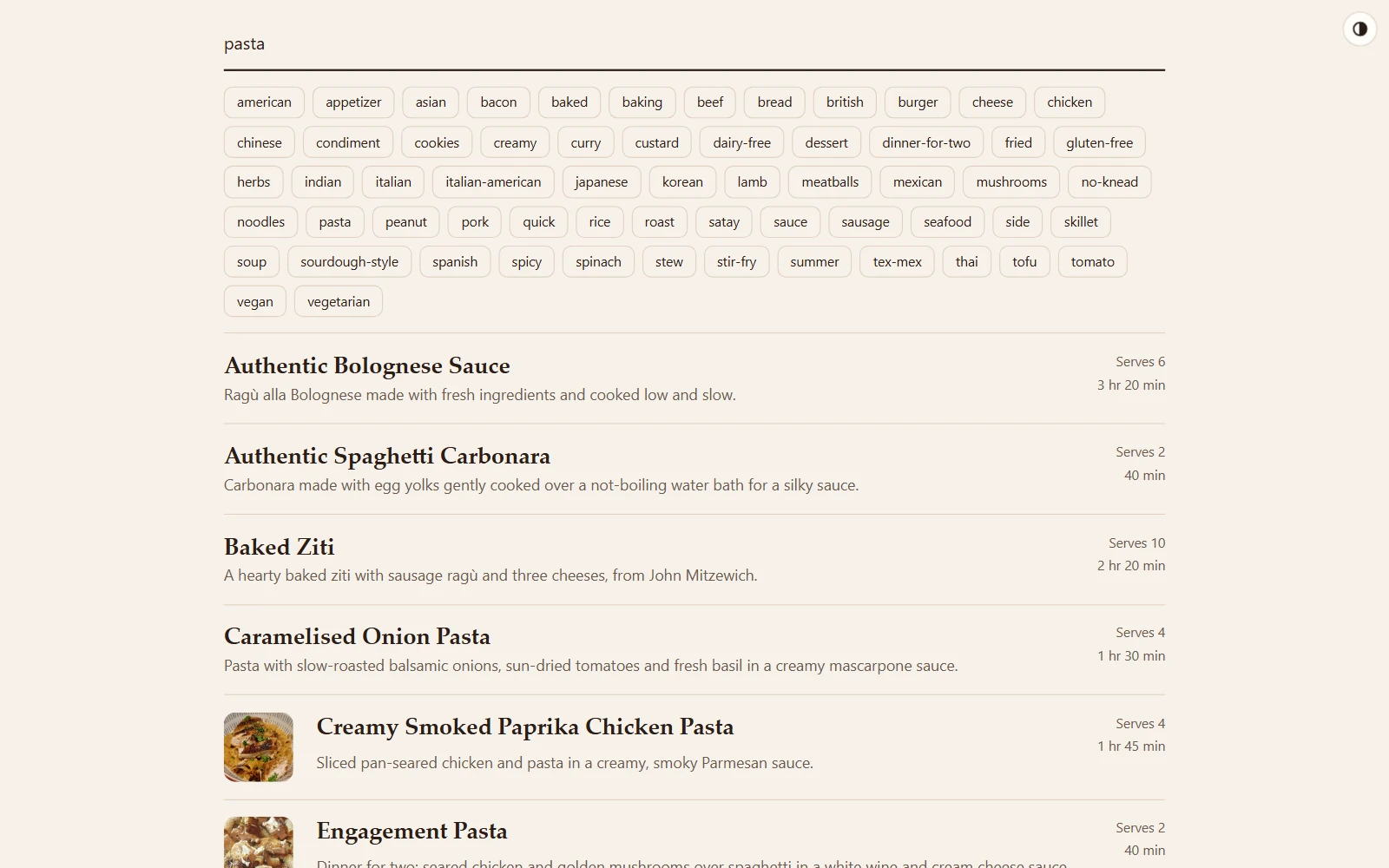
How it fits together
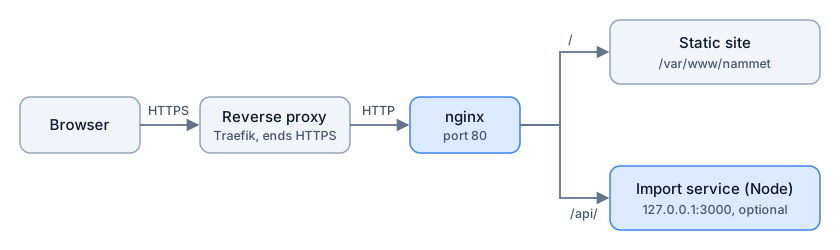
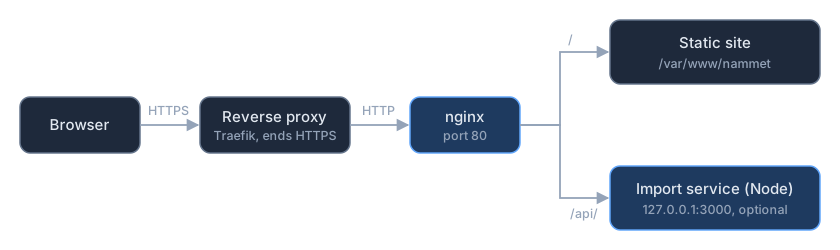
nginx lists the recipes/ folder as JSON, and the app fetches that listing to find recipes. Dropping a new .json file into the folder makes it appear on the next page refresh.
Source and support
The code is on GitHub under the MIT License. If the site has earned a place in your kitchen, you can buy me a pint on Ko-fi.